
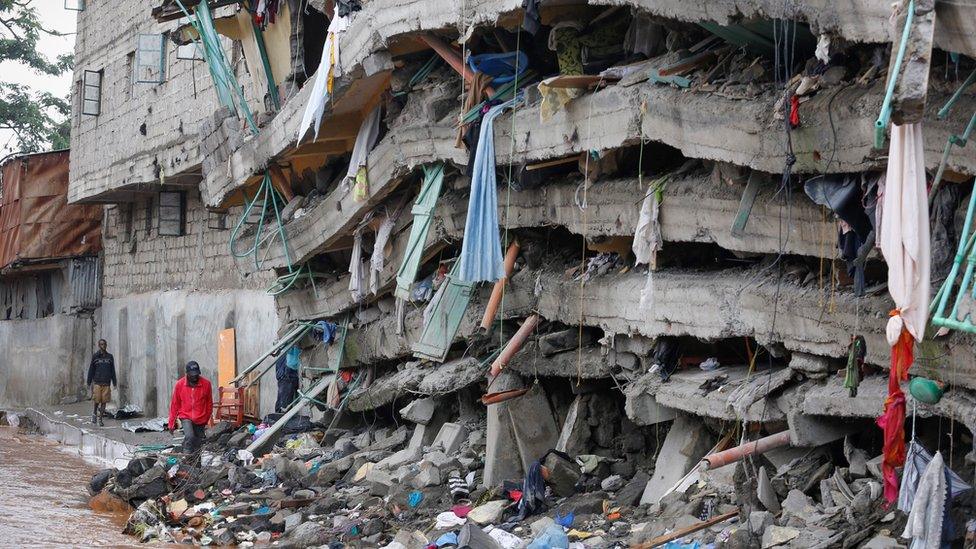
A Nairobi landlord has been sentenced to seven years in prison after his building collapsed in Huruma in 2016, killing 52 tenants.
Samuel Kamau Karanja, now in his 60s, was convicted of manslaughter and multiple planning and land offences linked to the ill-fated structure in Ngei II Estate.
The court found that he had constructed the building on a riparian reserve without approvals, occupied public land without a title deed and failed to observe basic structural safety requirements.
In sentencing him, the trial magistrate said Karanja acted recklessly and negligently, ignoring warnings that the building had developed dangerous cracks.
“The convict did nothing to protect the lives of the tenants despite being alerted,” the court ruled.
The magistrate said the prosecution had proved its case beyond reasonable doubt, dismissing the defence as mere denials.
“The evidence placed him squarely as the owner of the building from which 52 innocent lives were lost.”
Karanja had denied owning the property, claiming he was in Murang’a at the time of the collapse and only surrendered to police after seeing himself linked to the incident on television.
However, the court relied on testimony from six witnesses. A surveyor confirmed the building stood on a riparian reserve, while an assistant chief told the court that the accused threatened him when he tried to stop construction.
Other witnesses placed Karanja at the site interacting with the caretaker, while a Kenya Power official confirmed he had authorised electricity connections on his behalf.
The court heard that the building was constructed in 2013 in violation of by-laws and without supervision from relevant authorities, including the National Environment Management Authority and the Water Resources Management Authority.
Evidence also showed the structure was built at the riverbank instead of the required six-metre setback.
The magistrate said Karanja ignored clear warning signs when cracks appeared in the building, opting for superficial repairs instead of taking corrective action.
“The deaths of the 52 residents were caused by illegality, lawlessness, recklessness and negligence.”
Karanja was convicted on 31 counts of manslaughter, each carrying a seven-year sentence. He was also found guilty of constructing without approval and unlawfully occupying public land. The sentences will run concurrently.
The court said his age and ill health were considered but did not warrant a non-custodial sentence. He has 14 days to appeal.
